
For years, artwork was often treated as one of the final decisions in an interior project.
The architecture was completed. The furniture was selected. The lighting was installed. The materials were defined. Then, almost as an afterthought, someone asked:
“What should we put on the wall?”
That approach is changing.
In 2026, oversized wall art is increasingly being treated as a defining element of contemporary interiors rather than simply a decorative finishing touch. Recent design coverage repeatedly highlights large-scale statement artwork, fewer but more intentional pieces, and artwork serving as an anchor for the room.
At the same time, the broader design conversation is moving toward interiors that feel more personal, layered, emotionally engaging, and less generic. The American Society of Interior Designers’ 2026 Trends Outlook describes a design environment increasingly shaped by a desire for grounding, joy, truth, and human-centered experiences.
For architects and interior designers, this creates an important opportunity.
Large wall art can become part of the architecture.
And when the artwork is Fine Art Photography, the relationship becomes even more powerful.
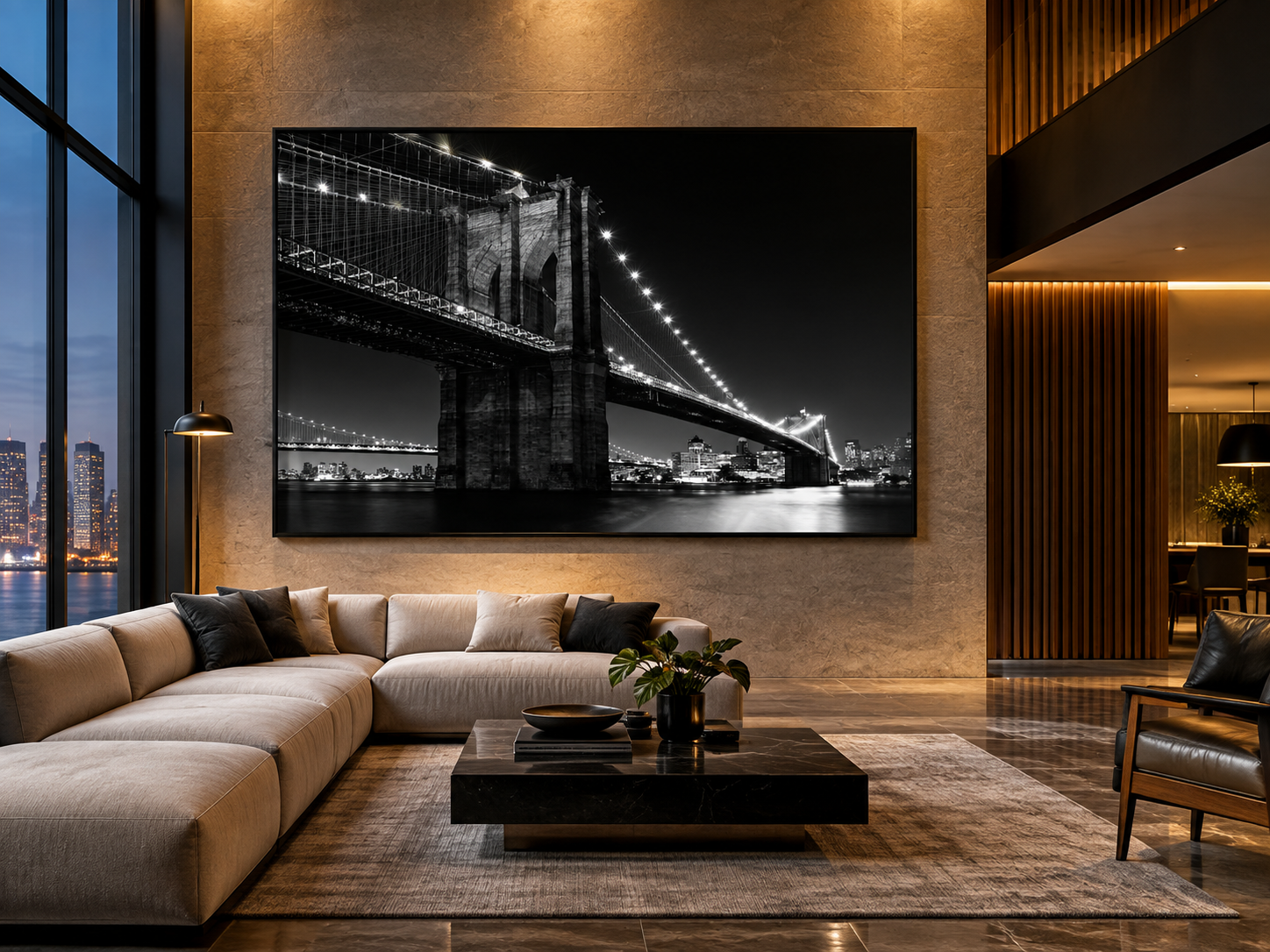
A carefully selected photograph can establish scale, create a focal point, reinforce geometry, soften hard materials, introduce contrast, and change the emotional atmosphere of a room.
The objective is not simply to make a wall look finished.
The objective is to make the entire space feel more intentional.
The popularity of oversized wall art is not just about making artwork bigger.
It reflects a broader change in how contemporary interiors are being designed.
Several current 2026 articles describe a shift toward large statement pieces that create a strong visual anchor, reduce visual fragmentation, and give the room a clearer hierarchy. Some also describe a movement away from generic, mass-produced decoration and toward artwork that feels more intentional and personal.
This is particularly relevant in modern architecture.
Large open-plan interiors.
Double-height ceilings.
Long walls.
Minimalist furniture arrangements.
Large windows.
Expansive architectural volumes.
These spaces can make smaller artworks feel visually disconnected.
A large artwork, on the other hand, can establish a relationship with the scale of the architecture.
It gives the eye somewhere to land.
It creates visual gravity.
It can also introduce something architecture alone cannot fully provide:
memory, interpretation and emotion.
One of the most interesting changes happening in interior design is the idea that art can become the starting point of the room rather than the final element added to it.
Recent 2026 design coverage describes this as a movement toward art acting as an anchor: the artwork influences the palette, scale, sightlines and emotional temperature of the interior instead of simply occupying whatever wall remains available.
This is closely related to what is sometimes described as art-led interiors.
The concept is simple.
Instead of:
Architecture → furniture → decoration → art
the process can become:
Architecture + art → furniture → lighting → materials → final atmosphere
For an architect, this shift is significant.
A strong artwork can influence where furniture is positioned.
It can determine the visual center of a room.
It can affect how a wall is illuminated.
It can influence the balance between materials.
It can even change which wall should become the project’s primary focal point.
The traditional gallery wall still has a place.
It can work beautifully in corridors, staircases, intimate spaces and personal collections.
But in contemporary architecture, there are many situations in which a single piece of large wall art creates a stronger result.
The reason is visual hierarchy.
When too many elements compete for attention, the eye moves constantly.
A single large artwork creates concentration.
It allows the viewer to stop.
Look.
Observe.
Return.
That is especially powerful with Fine Art Photography, because photographic works often contain subtle details that benefit from physical scale.
A large photograph gives the viewer greater opportunity to experience texture, tonal transitions, light, shadow and perspective.
The artwork is no longer simply seen.
It is encountered.
Recent 2026 coverage from designers and art publications repeatedly highlights the strength of single statement pieces as alternatives to more fragmented gallery walls.
This is where professional art selection for interior designers becomes important.
Oversized wall art should not be selected simply because the wall is large.
The artwork needs to be proportional to:
An oversized artwork that is too small for the architecture will still look undersized.
An artwork that is too large for an intimate room can overwhelm everything around it.
The objective is not maximum size.
The objective is appropriate presence.
OX makes this distinction clearly in its own size philosophy. The brand explains that in Fine Art Photography, size does more than define scale — it defines presence. Its current formats range from Small and Medium to Large and Extra Large, with larger works receiving additional verification to preserve detail, contrast and emotional fidelity.
That is a useful principle for any architect:
Size should serve the experience of the space.
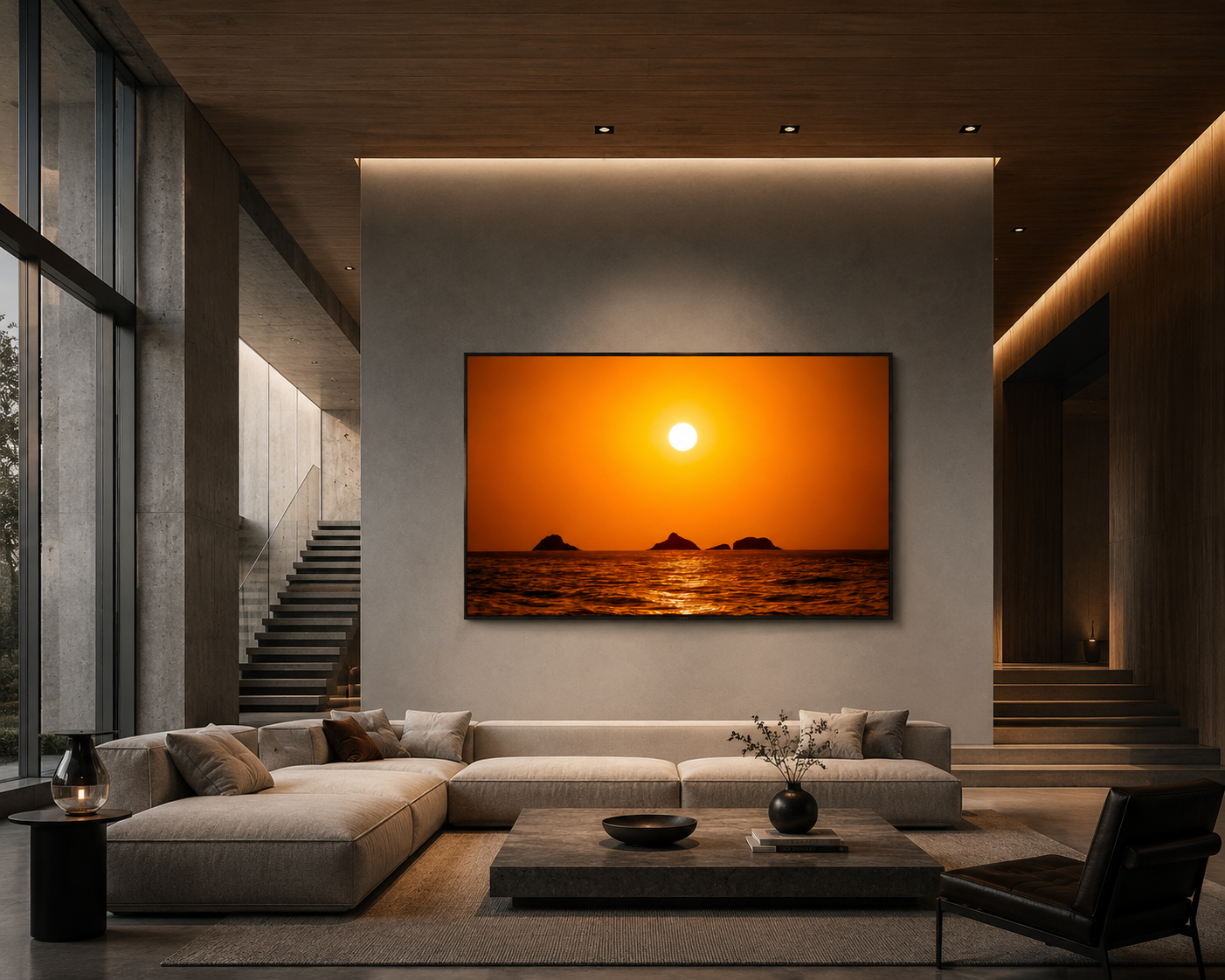
For architects, oversized wall art can perform several functions simultaneously.
A large artwork can immediately establish the primary visual destination of a room.
A vertical photograph can emphasize height.
A panoramic photograph can reinforce horizontality.
A geometric urban composition can echo lines already present in the architecture.
A large wall of concrete, plaster, stone or wood can feel visually heavy.
A carefully selected photograph can balance that mass.
The strongest result is not always the one that matches.
Black-and-white photography against warm materials can create tension.
A colorful photograph can disrupt a neutral interior.
A soft landscape can contrast with a highly structured architectural space.
In open-plan environments, one powerful work can create a visual pause.
This is particularly useful where circulation, furniture and architectural lines might otherwise create continuous visual movement.
One of the mistakes in Fine Art Photography for interior design is thinking only about color.
Materiality is equally important.
Consider a room built around:
Concrete + blackened steel
A monochromatic architectural photograph may reinforce the language of structure and contrast.
Consider:
Natural oak + stone
A landscape or atmospheric photograph can create continuity between the built environment and the natural world.
Consider:
Marble + brass + dark wood
A restrained black-and-white photograph can introduce sophistication without adding another competing color.
Consider:
Glass + polished surfaces
Abstract or reflective photography can create a visual dialogue with transparency and light.
The artwork should not necessarily disappear into the materials.
Sometimes the strongest interiors are created when the artwork introduces a controlled contradiction.
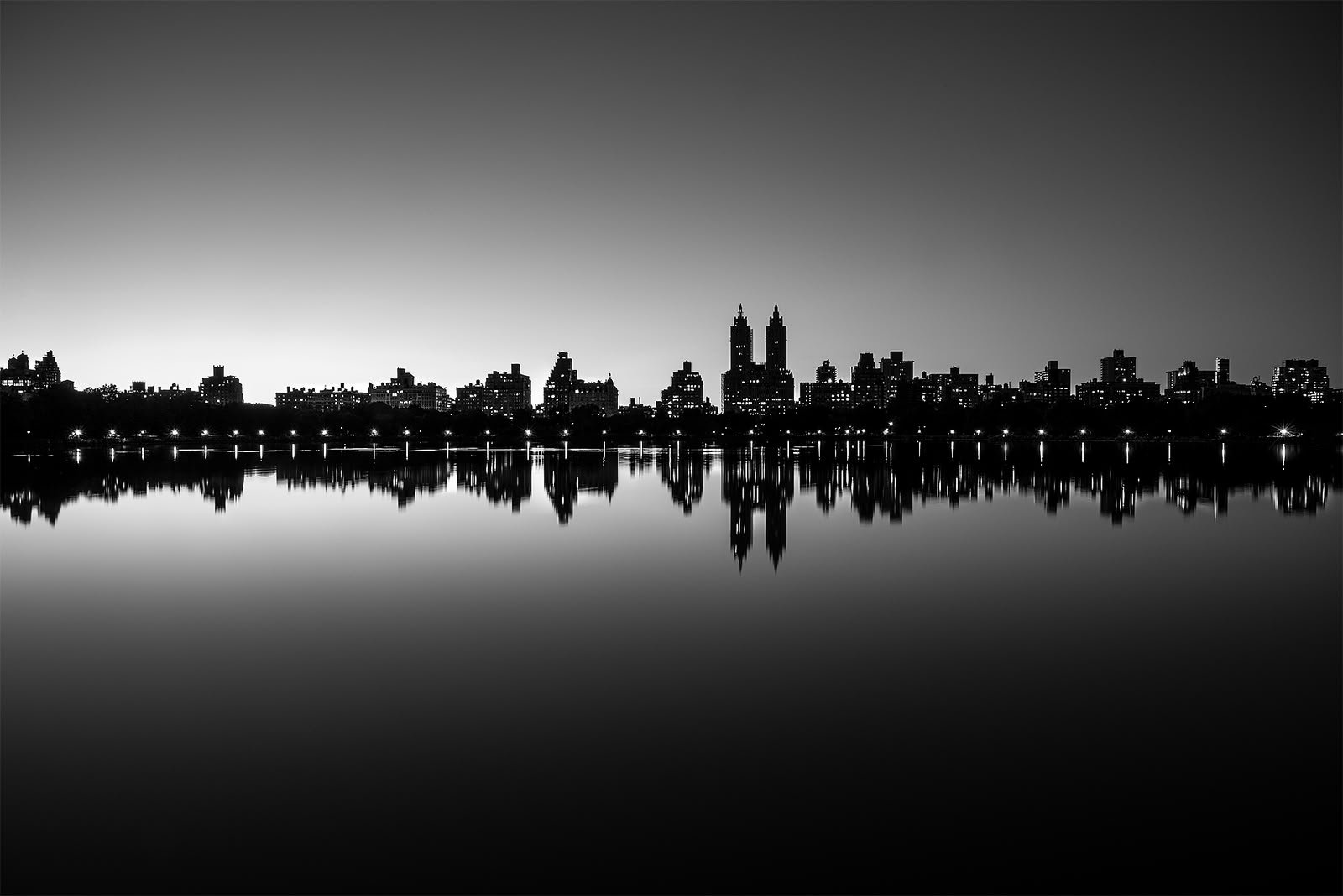
Black and white photography for interiors has a particular advantage in architectural environments.
Without color, the image can place greater emphasis on:
That makes monochrome work particularly compatible with contemporary materials such as concrete, stone, steel and glass.
But the appeal is not only visual.
Black and white can also introduce psychological distance.
It can make a room feel quieter.
More contemplative.
More timeless.
The OX approach is particularly aligned with this idea. Olavo Xavier describes his monochromatic work as composed almost like music, using rhythm, contrast and precision.
For a deeper look at the subject, the OX blog already has:
Decorating with Black and White Photography: Timeless Elegance for Modern Spaces
This new article should link to that content rather than repeating everything already explained there.
Oversized wall art does not need to repeat the colors of an interior.
A better approach is to create a relationship between the artwork and the room.
OX’s current color guidance makes this distinction explicit: color should not simply “match” the room; it should transform the atmosphere. The site discusses relationships such as neutral walls with high-contrast art, warm interiors with cool-toned photography, and earthy interiors with earth-tone photography.
This is an important distinction for professionals.
Matching produces coordination.
Contrast can produce design.
For example:
A warm wood interior can gain depth from cool blue photography.
A neutral interior can gain energy from stronger tones.
A dark wall can be balanced with a softer, atmospheric artwork.
A monochromatic space can gain a powerful focal point from a high-contrast photograph.
The artwork is not simply part of the palette.
It helps define the palette.
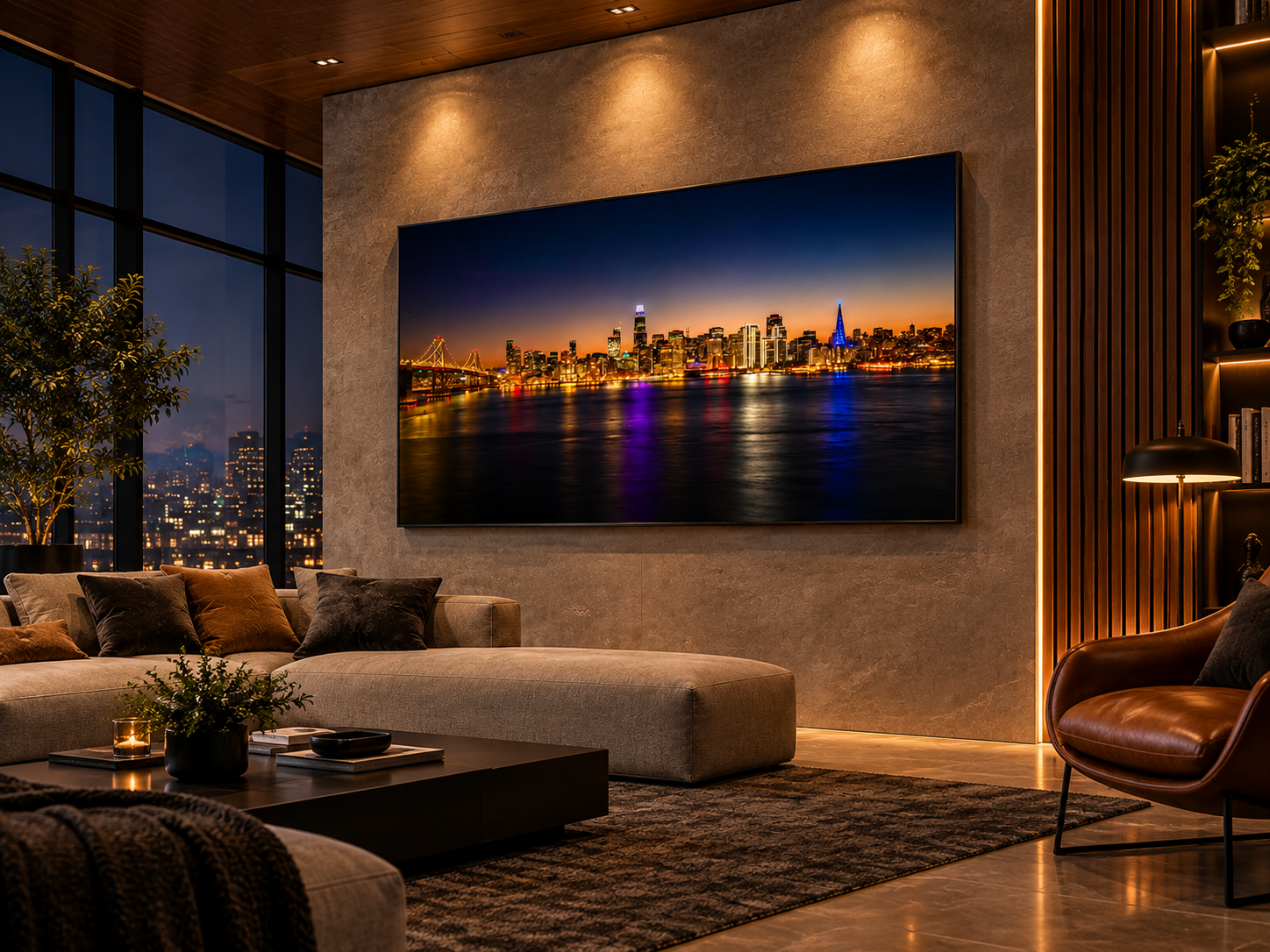
The living room is one of the most natural applications for large wall art.
But the decision should not start with the artwork.
It should start with the furniture and architecture.
OX’s existing sofa guide recommends that artwork above a sofa generally span around two-thirds to three-quarters of the sofa’s width, with the bottom of the frame approximately 6–10 inches above the sofa and the center of the work around 57–60 inches from the floor as a general starting point.
These are not rigid laws.
They are tools for proportion.
For architects and designers, the important idea is that the photograph and furniture should read as one composition.
For more detailed guidance:
Fine Art Above the Sofa: How to Choose the Right Piece and Size
Large-scale artwork can also be effective in bedrooms, but the emotional language should usually be different.
A bedroom needs a different rhythm from a lobby or living room.
The ideal artwork may be:
The objective is not to create drama simply because the artwork is large.
The scale can be substantial while the image remains emotionally restrained.
This is where the combination of large format Fine Art Photography and subtle visual language can be especially powerful.
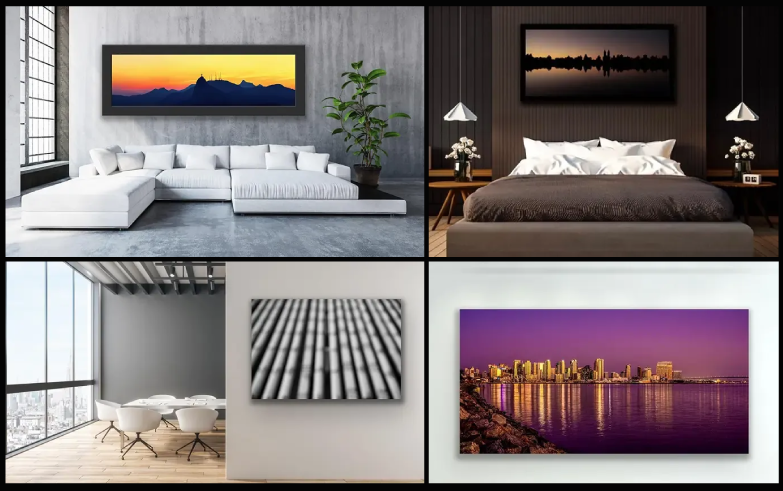
The opportunity becomes even more interesting when we move into hospitality.
Hotels, restaurants, private clubs, resorts and wellness spaces are not designed only for functionality.
They are designed around experience.
The first visual impression begins before the guest speaks to anyone.
A large work in a lobby can create an arrival moment.
A long sequence of works can guide movement through a corridor.
A carefully selected photograph in a suite can reinforce a sense of calm.
A dramatic image in a restaurant can establish atmosphere.
This is why art for hotel interiors and photography for hospitality interiors are becoming increasingly relevant to professional specification.
Recent 2026 design coverage continues to emphasize artwork as an anchor in hospitality spaces, helping establish brand story, circulation and atmosphere.
For OX, this is especially relevant because the brand already positions Fine Art Photography as something designed to live in real spaces, including homes, boutique hotels and creative environments.
The most successful art for architects does not feel disconnected from the design concept.
Imagine a project built around:
Stillness.
The artwork might reinforce quietness through atmosphere, negative space and restrained tones.
Imagine a project built around:
Movement.
Urban photography, perspective and dynamic geometry may be more appropriate.
Imagine a project built around:
Nature.
Landscape photography can extend the experience beyond the physical boundaries of the room.
Imagine a project built around:
Precision.
Black-and-white architectural or abstract photography can reinforce the project’s geometry.
This is where art selection for architects becomes a creative process rather than a procurement exercise.
The question becomes:
What artwork belongs to the story of this project?
The phrase art-led interiors is increasingly useful because it describes exactly this shift.
The artwork is no longer something added after design.
It can become one of the things that defines design.
An architect can begin with a photograph and ask:
Where should this work live?
What wall gives it enough space?
What lighting will reveal its tonal range?
Which materials support it?
Which furniture should sit beneath it?
Should the room remain quiet so the artwork has presence?
This is a very different design process.
It is also increasingly visible in high-end interiors.
Current 2026 coverage describes a move toward more personal and art-forward environments, with artwork becoming an anchor rather than an afterthought. The upcoming 2026 Kips Bay Decorator Show House in New York is particularly notable because fine art will be integrated with the show house through a dedicated art curator for the first time.
That is an important signal for architects and interior designers:
Art is becoming more integrated into the design conversation.
There is an important difference between filling a wall and specifying an artwork.
Mass-produced wall decor is often designed to be visually compatible with as many rooms as possible.
Fine Art Photography starts somewhere else.
It begins with an artist.
A point of view.
An artistic language.
A specific image.
A body of work.
At OX, collections are positioned as visual statements, with works offered in small editions, numbered and signed, produced using archival materials.
This matters for high-end projects.
A luxury interior is often built around distinctive choices.
Rare materials.
Custom furniture.
Special lighting.
Art should not necessarily be the one element that becomes generic.
When an architect specifies fine art photography for interior design, they are also bringing the artist’s worldview into the project.
That makes authorship important.
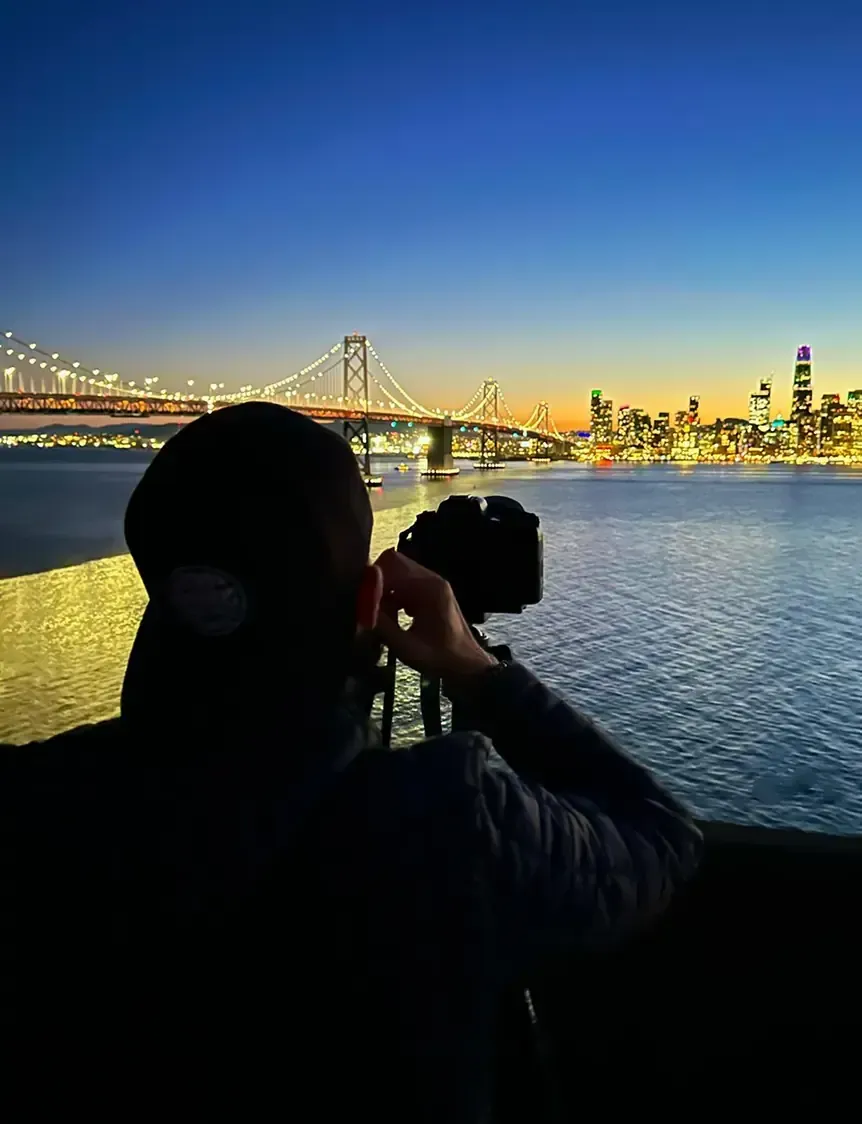
Olavo Xavier’s background is unusual and central to his artistic language. After approximately fifteen years in corporate life, he left that path at 33, studied design and art, and eventually found photography as a new form of expression. His work today is rooted in California and shaped by emotional tension, silence, contrast and memory.
His artistic process is strongly connected to music.
He describes each image in terms of beat, pause, swell and silence, and explains that the sensation comes before the image. He tests tones, paper and framing until the photograph feels right.
For a designer, this means the artwork is not merely another object in a specification sheet.
It has a voice.
Before specifying oversized wall art, go through these questions:
The artwork should strengthen the project’s identity.
Which wall or sightline naturally deserves the artwork?
Consider furniture, ceiling height, wall dimensions and viewing distance.
Avoid treating lighting as an afterthought.
Look at stone, wood, plaster, glass, metal, textiles and flooring.
Calm, tension, movement, reflection, energy or intimacy?
Use color intentionally.
The answer depends on the architecture and the story of the project.
The frame should reinforce the artwork rather than compete with it.
For high-end projects, limited editions, authorship and authenticity can add another layer of meaning.
This last consideration is especially relevant to OX, where works are presented in limited, numbered and signed editions.
For more information about collecting:
Why Invest in Limited Edition Fine Art Photography: Value, Emotion, Legacy
The popularity of oversized wall art should not turn into a new decorating formula.
Large is not always right.
A large artwork may be inappropriate when:
This is why professional curation matters.
The best artwork is not necessarily the biggest.
It is the artwork whose scale, composition and emotional language are right for the project.
The deeper trend behind oversized wall art is not size.
It is intention.
The industry is gradually moving away from interiors that look assembled from a catalog and toward environments that communicate identity.
The same pattern is visible across current 2026 design coverage: greater emphasis on personalization, meaningful objects, craftsmanship, atmosphere, layered materials and art as an important part of the story.
This is why the concept of art-led interiors matters.
The question is no longer simply:
“What should we put on this wall?”
It becomes:
“What should this space say?”
The artwork becomes part of the answer.
This approach connects naturally to the way OX works.
The current OX personalized curation process is designed around the relationship between artwork, space, mood and intention. Clients can provide information about the location, dimensions, existing colors, preferred palette and the feeling they want the artwork to evoke. Olavo then reviews the information personally and provides a curated selection of three to five works, with size and framing recommendations and visual mockups when available.
For architects and interior designers, this can become a practical project workflow.
Instead of browsing hundreds of unrelated options, the designer can begin with:
Project
→ Concept
→ Architecture
→ Materials
→ Light
→ Dimensions
→ Atmosphere
→ Art selection
→ Scale
→ Framing
→ Installation
That is a much more meaningful way to approach fine art photography for architects.
The artwork becomes part of the project.
Not an afterthought.
The strongest oversized wall art does not look oversized for the sake of being oversized.
It looks right.
It feels as though the wall was designed for it.
The furniture seems to belong beneath it.
The lighting reveals it naturally.
The architecture gives it room to breathe.
The viewer knows where to look.
And, perhaps most importantly, the artwork creates a feeling that stays after the first impression.
That is what makes large format Fine Art Photography so relevant to contemporary architecture and interior design.
A photograph can reinforce scale.
It can introduce silence.
It can create movement.
It can soften architecture.
It can challenge it.
It can connect a room to memory, landscape or place.
And it can give an otherwise beautiful interior something much harder to design:
identity.
For architects and interior designers, the opportunity is not simply to find large wall art.
It is to find the work that belongs to the project.
At OX Fine Art, Olavo Xavier creates photography with intention, emotional depth and a distinct visual language. The works are conceived to be experienced physically, displayed with care, and collected as limited editions.
Architecture defines the space.
Art defines how we remember it.
And in 2026, perhaps the most powerful wall in a project is the one that has finally been given something worth looking at.
Oversized wall art is artwork intentionally produced at a scale large enough to establish a strong visual presence within a room. Rather than simply filling a wall, it can act as a focal point, reinforce architectural proportions and influence the atmosphere of an interior.
Current 2026 interior-design coverage repeatedly highlights large statement artwork, fewer but more intentional pieces, and artwork becoming a stronger anchor within contemporary interiors. The trend is connected to a broader preference for more personal and less generic spaces.
Yes. Oversized wall art can be particularly effective in architectural projects with large walls, open-plan layouts, high ceilings, hospitality spaces and luxury residences. It should be selected according to proportion, viewing distance, architecture, lighting and the intended emotional effect.
Not always. A single large artwork can create stronger visual focus and reduce fragmentation, while a gallery wall can work well in hallways, staircases, intimate areas and personal collections. The best choice depends on the architectural composition and the story the project needs to tell.
Fine Art Photography combines artistic authorship with visual elements such as light, perspective, texture, contrast and composition. When produced at an appropriate scale, the photograph can become a significant part of the experience of the interior rather than simply decorative wall art.
Yes. Black and white photography can work particularly well with concrete, stone, glass, steel, wood and neutral palettes because it emphasizes form, light, shadow, texture and geometry. OX treats black and white as a core artistic language in Olavo Xavier’s work.
There is no universal size. The decision should consider wall dimensions, furniture, ceiling height, viewing distance, circulation and the artwork’s visual weight. OX currently offers Small, Medium, Large and Extra Large formats and emphasizes that size defines presence as well as scale.
Yes. Large-scale artwork can establish a strong arrival point in hotel lobbies, create rhythm in corridors, reinforce atmosphere in restaurants and add identity to suites, lounges and wellness environments. Current hospitality design sources increasingly discuss art as an anchor for guest experience.
Sometimes. When a particular artwork is central to the concept, choosing it early can influence scale, palette, furniture placement and lighting. This is the essence of art-led interiors: allowing art to participate in the design rather than being added at the end.
Yes. OX offers personalized curation in which Olavo Xavier reviews the client’s space, dimensions, existing colors, preferred palette and intended feeling, then creates a curated selection with size and framing recommendations and visual mockups when available.