
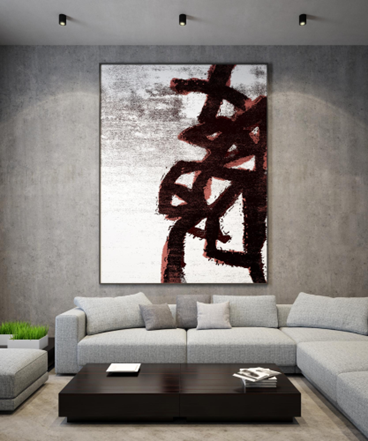
December turns your home into a gathering place. Guests notice sightlines, lighting, and focal points, so art size, spacing, and height matter more than ever.
Use this practical, evidence-informed art size guide to place fine art photography in living rooms, halls, bedrooms, and home offices using museum-style hanging heights, reliable proportion rules, and conservation-aware lighting.
The payoff: cleaner reads, fewer re-hangs, and pieces that look refined in winter light.
Centerline height (eye level). Start by centering artwork around 57–60 inches from the finished floor. This eye-level band is comfortable seated or standing and works as a universal baseline. Adjust for unusually tall ceilings or low furniture, but begin here.
Proportion to furniture. Above sofas, consoles, headboards, or credenzas, aim for artwork that is about two-thirds the width of the piece below. The ratio prevents the “postage stamp” effect and balances visual mass.
Breathing room (vertical gap). Keep 4–10 inches between the top of furniture and the bottom of the frame. Go tighter over mantels at 4–6 inches, allow 6–8 inches over sofas and consoles. These ranges keep the composition connected without crowding.
Conservation-minded light. Avoid direct sun and minimize UV exposure. Visible light is cumulative, so control intensity and duration, especially during bright winter afternoons and party lighting. Aim fixtures to avoid glare on glazing.
Anti-glare, UV-filter glazing. Anti-reflective glazing that blocks up to 99% of UV keeps black-and-white prints legible in daytime walkthroughs and candlelit dinners while protecting the image.
In an 8–12 ft seating layout, larger formats read best and avoid visual noise from décor. Choose one commanding piece as the anchor and place its centerline at 57–60 inches. Fine-tune height relative to sofa-back and ceiling lines, and keep 6–8 inches between the sofa top and the frame bottom to maintain connection.
For a single piece above a sofa, target roughly two-thirds the sofa width. If you prefer a pair, treat the two frames as one block that still respects the two-thirds proportion. Keep edge gaps consistent, typically 2–4 inches, so the set reads as a single unit.
If the artwork faces windows, specify anti-reflective glazing and aim picture lights at an angle instead of head-on. This reduces specular reflections and preserves micro-contrast.
Let the photograph act as the calm anchor against seasonal décor. Black-and-white with confident midtone structure complements wool, wood, and brass. Keep lights on dimmers so the print reads clearly without overexposure.
Sightline first. Use a single shared centerline at 57–60 inches to keep a hallway series calm at a glance. In narrow corridors, smaller verticals or a tight triptych guide movement without compressing the space.
Tighten gaps to 1.5–2.5 inches between small works for rhythm. Above accent tables or benches, maintain a vertical gap of 6–8 inches so art and furniture feel connected.
Halls can be bright in winter. Avoid direct sun, use shielded beams, and specify anti-reflective glazing to keep reflections down. Remember that even visible light is cumulative, dimmers are your ally.
Lower the centerline slightly. Because viewing is seated or reclined, drop the centerline a couple of inches from the 57–60 inch baseline for pieces opposite the bed. Above a headboard, keep the two-thirds width rule and maintain an 8–10 inch gap from headboard top to frame bottom.
Two medium prints above a queen or king feel elevated when treated as one block. Maintain a consistent gap and shared centerline while keeping total width near the two-thirds target.
Avoid fixtures that create point reflections on glazing. Favor indirect, low-glare solutions and dimmers to limit exposure time and maintain a restful environment.
For a clean video background, set the centerline closer to seated eye level so the composition falls within the webcam frame. A vertical or square format behind your chair often reads cleaner than a wide landscape.
Above credenzas or storage, use the two-thirds proportion and a 6–8 inch gap. Over a monitor, keep art high enough to avoid interference while staying in the 57–60 inch band for comfortable standing reads across the room.
Separate task lighting from art accent lighting. Aim accent lights obliquely to minimize glare on glazing and use anti-reflective UV glazing to preserve legibility during long, bright workdays.
For the fireplace, treat the mantel like furniture. Keep the frame bottom 4–6 inches above the mantel and align width to about two-thirds of the opening or mantel length. Avoid excessive heat and direct up-lighting.
For the entry, a single vertical at a 57–60 inch centerline creates arrival drama. Keep console décor low so the photograph reads first.
Avoid hostile microclimates. High humidity and direct sun are risky for photographs. Favor interior walls, and use UV-filter glazing. Control light exposure as a routine, not a one-time setup.
Anti-reflective, UV-filter glazing. Conservation-grade glass with sub-1% reflectance and up to 99% UV blocking delivers clarity with protection, ideal for holiday hosting when lights and windows are active.
Hardware and wall type. Match anchors to load and substrate (drywall, plaster, masonry) to keep installs safe during busy gatherings. Use quality hangers or a French cleat for heavier pieces.
Museums remind us that all light affects light-sensitive media. Excess light harms with no benefit, too little hides the work. Aim for “just enough,” well directed and dimmable.
OX Fine Art delivers authorial editions with museum-minded specifications and installation guidance that follows proven standards.
You get curator-guided sizing, quick room mockups, anti-reflective UV glazing, and white-glove delivery. Your home feels beautifully composed the moment guests arrive.
Book your selection call and we’ll finalize sizes, provide hang diagrams, and schedule installation in time for December hosting.
| Cookie | Duration | Description |
|---|---|---|
| cookielawinfo-checkbox-analytics | 11 months | This cookie is set by GDPR Cookie Consent plugin. The cookie is used to store the user consent for the cookies in the category "Analytics". |
| cookielawinfo-checkbox-functional | 11 months | The cookie is set by GDPR cookie consent to record the user consent for the cookies in the category "Functional". |
| cookielawinfo-checkbox-necessary | 11 months | This cookie is set by GDPR Cookie Consent plugin. The cookies is used to store the user consent for the cookies in the category "Necessary". |
| cookielawinfo-checkbox-others | 11 months | This cookie is set by GDPR Cookie Consent plugin. The cookie is used to store the user consent for the cookies in the category "Other. |
| cookielawinfo-checkbox-performance | 11 months | This cookie is set by GDPR Cookie Consent plugin. The cookie is used to store the user consent for the cookies in the category "Performance". |
| viewed_cookie_policy | 11 months | The cookie is set by the GDPR Cookie Consent plugin and is used to store whether or not user has consented to the use of cookies. It does not store any personal data. |