


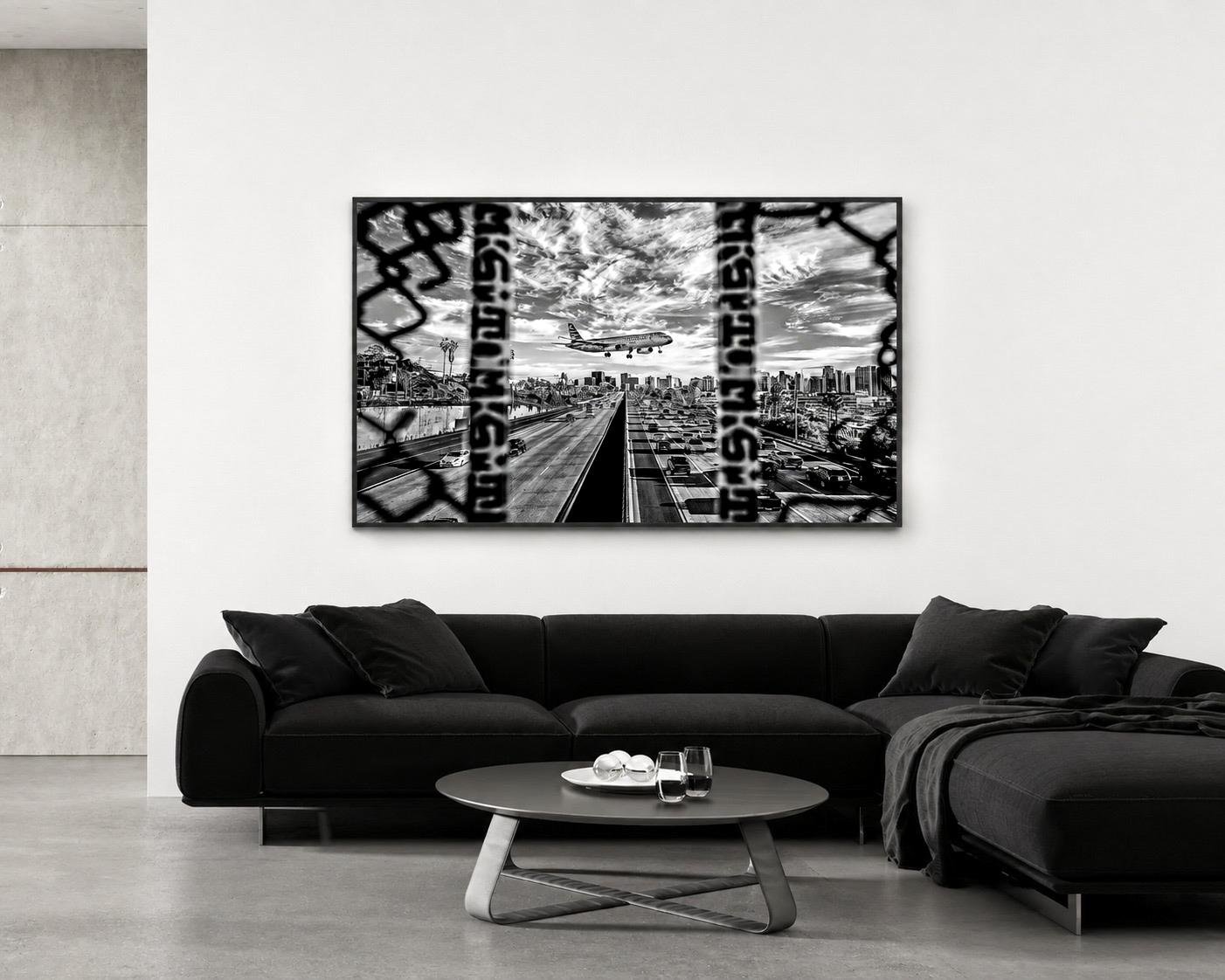
Fine Art Photography goes far beyond capturing a moment. It begins with an artistic intention, in which each image is conceived to convey emotions, awaken memories, and establish a connection between the artwork, the environment, and the person experiencing it.
In a world where millions of photographs are created every day, understanding what Fine Art Photography is means understanding precisely what distinguishes an image created simply to record something from a photograph created to endure.
Fine Art Photography is an artistic expression. It may portray a place, a person, a landscape, architecture, or even an abstract form, but its purpose does not end with visual representation. There is an idea, a feeling, an interpretation, and a choice behind the image.
That is why a Fine Art photograph does not simply need to be beautiful.
It needs to say something.
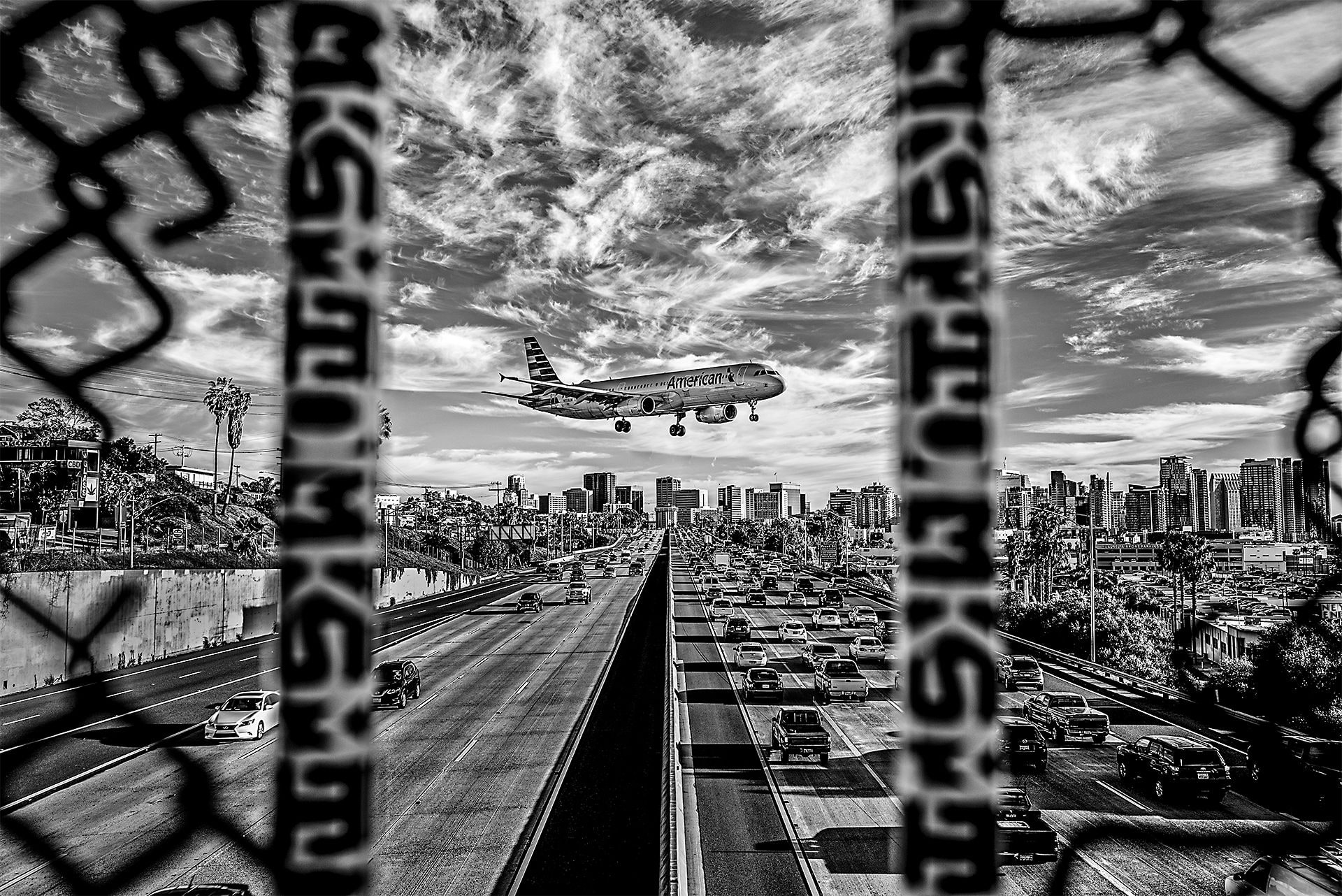
The term Fine Art Photography can be understood as photography created with an artistic purpose. The photographer is not simply trying to show what was in front of the camera. They interpret what they see and transform that perception into an artwork.
In Fine Art Photography, the camera is a tool, but the photograph begins before the camera.
It begins with perception.
It begins with choice.
It begins with intention.
Light, shadow, composition, perspective, contrast, texture, negative space, movement, and visual silence can all be used to construct a particular experience.
That is why two people can photograph exactly the same place and create completely different images. The equipment may be similar. The setting may be the same. The moment may even be identical.
But the artistic interpretation will be different.
Fine Art Photography Is Not Simply a Beautiful Photograph
This is one of the most common questions when someone begins to discover Fine Art Photography.
A photograph can be technically perfect and still not be Fine Art.
Having a good camera, excellent resolution, beautiful colors, or sophisticated editing does not automatically turn a photograph into an artwork.
In Fine Art Photography, technique serves intention.
The photographer needs to understand what they want the image to evoke.
Silence?
Loneliness?
Strength?
Serenity?
Tension?
Memory?
Beauty?
The image is constructed to guide the viewer’s eye and create an experience.
In Olavo Xavier’s work, this relationship between photography, emotion, and perception is particularly important. His artistic process is influenced by music, design, art, and cinema. Photography is approached almost like a musical composition: there is rhythm, pause, contrast, tension, and silence.
That is why his images are not created merely to be seen.
They are created to be felt.
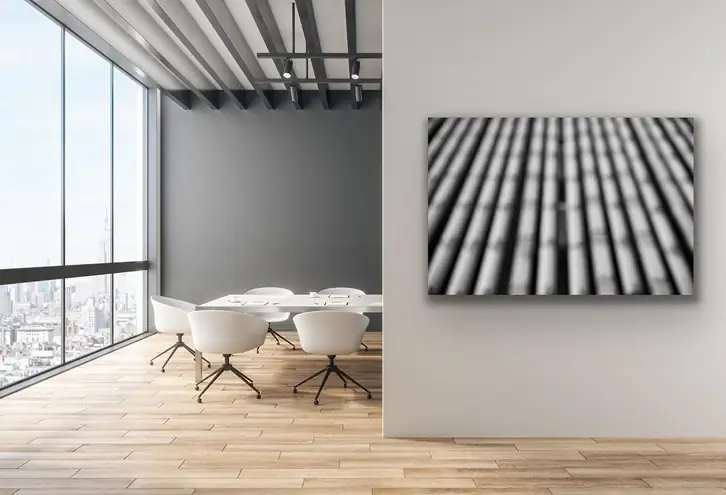
The main difference is intention.
Documentary photography usually seeks to record an event. Commercial photography serves a communication, sales, or marketing purpose. Fine Art Photography, on the other hand, primarily emerges from an artistic vision.
This does not mean that one is better than the other.
They are simply different approaches.
In commercial photography, for example, the image needs to fulfill specific objectives defined by a brand, campaign, or client. In Fine Art Photography, there is greater freedom to explore a personal vision, an emotion, or a concept.
This difference is also explored in greater depth in our article about Fine Art Photography vs. Commercial Photography.
In simple terms:
Documentary Photography: records.
Commercial Photography: communicates.
Fine Art Photography: interprets.
Of course, these boundaries can overlap. Fine Art Photography can document a place, just as commercial photography can have remarkable aesthetic quality. What distinguishes artistic photography is the way the image is conceived and the role that the artist’s intention plays in the final result.
One of the most important words for understanding Fine Art Photography is intention.
Before there is a photograph, there is a decision.
What should be photographed?
Where should it be photographed from?
When should the photograph be taken?
What should remain inside the frame?
What should be removed?
How should light be used?
What atmosphere should remain?
What should the viewer feel?
These decisions are part of the artistic process.
In Olavo Xavier’s work, the feeling comes before the image. The photographer describes his process as a search for moments when something changes in the atmosphere, in the subject, or within himself. From that perception, the construction of the artwork begins.
This helps explain why a Fine Art photograph may appear simple at first glance and still provoke a complex experience.
Sometimes, there is a great deal happening within an image.
At other times, there is precisely the opposite.
There is silence.
And silence can also be an artistic choice.
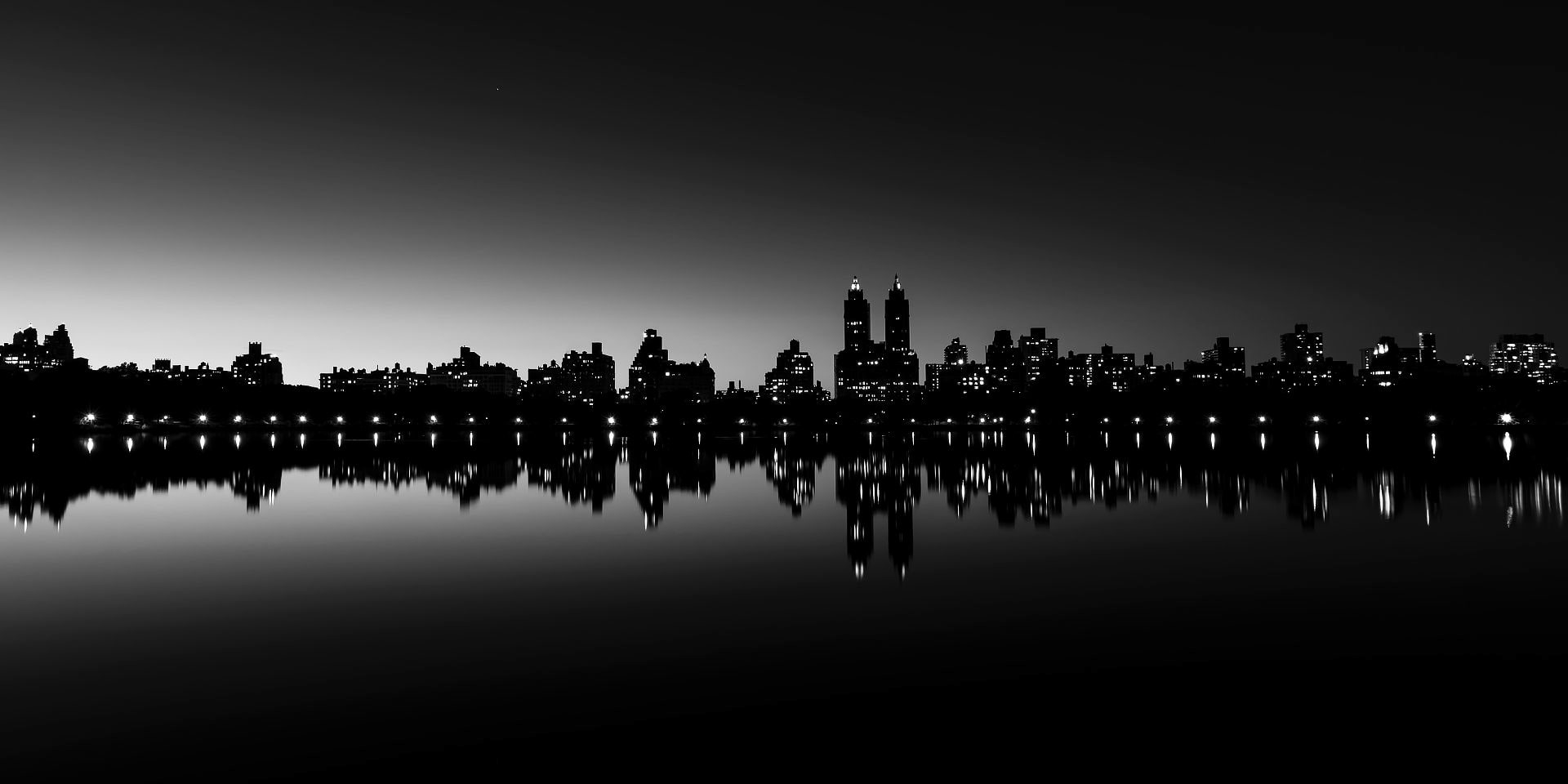
Fine Art Photography depends on carefully constructed visual decisions.
Light can reveal or conceal.
Shadow can create depth.
Perspective can completely change the perception of a space.
Composition can guide the eye.
Contrast can create tension.
The absence of elements can communicate calm.
Every detail contributes to the narrative.
That is why the process of creating a Fine Art photograph does not end when the photographer presses the shutter.
There is also a process of selection, editing, refinement, and preparation of the artwork.
In Olavo Xavier’s work, this process includes testing tones, papers, and framing options until the photograph reaches the desired result. Technical precision is not an end in itself, but rather a way of preserving the emotion intended in the image.
Black and white holds a special place in the language of Fine Art Photography.
By removing color, the photographer can direct attention toward other elements: light, shadow, texture, form, geometry, expression, and contrast.
In Olavo Xavier’s work, black and white is not simply treated as a filter applied after the photograph is taken. It is an aesthetic and conceptual choice. The absence of color reduces distractions and allows light and shadow to play a stronger role in the composition.
A black-and-white photograph can feel silent.
But it can also be incredibly powerful.
It can transform a landscape into a memory.
Architecture into rhythm.
A shadow into a narrative.
An empty space into a presence.
This ability to transform simple elements into visual experiences is what makes Fine Art Photography so powerful.
One of the most fascinating characteristics of Fine Art Photography is its relationship with architecture and interior design.
When an artwork is chosen simply to fill an empty wall, it can function as decoration.
When it is chosen for what it evokes, it can do much more.
A Fine Art photograph can create a focal point, establish visual rhythm, generate contrast, and change the atmosphere of a room.
It can make a living room feel more contemplative.
An office can gain personality.
A hallway can become a small gallery.
A bedroom can acquire a sense of silence and intimacy.
That is why choosing artwork does not necessarily mean looking for an image that simply “matches” the sofa, wall, or curtains.
The artwork can establish a relationship with the environment without disappearing into it.
This idea is also explored in our article about how to choose Fine Art Photography for different spaces, including considerations such as proportion, size, framing, and placement.
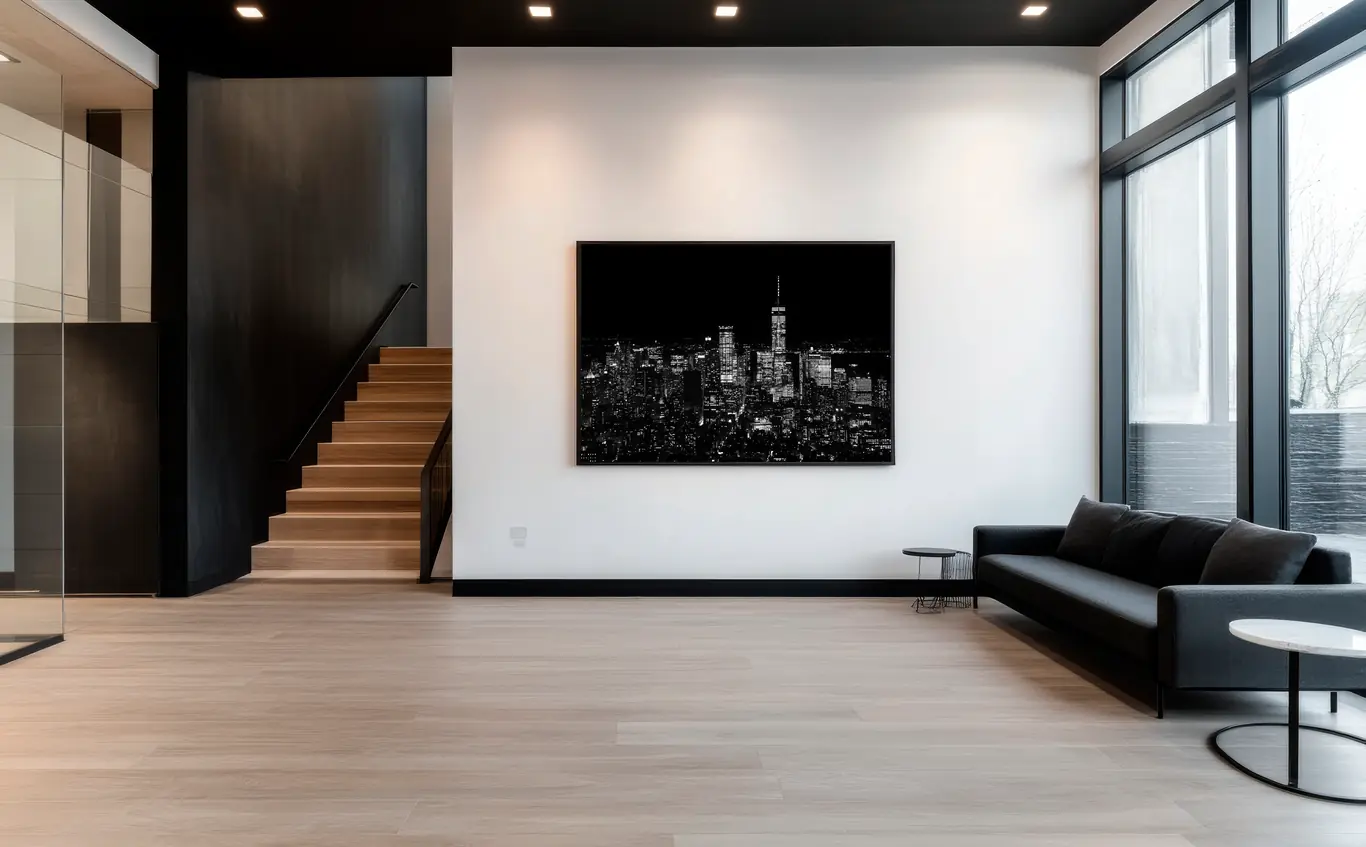
In Fine Art Photography, size is not simply a practical consideration.
Format influences the presence of an artwork.
A large photograph can visually dominate a wall and create a more immersive experience. A smaller artwork can create a more intimate relationship and invite the viewer to move closer.
That is why choosing the right size is part of the curatorial process.
OX Photography offers different formats and sizes, considering not only the dimensions of the wall, but also the relationship between the photograph, the space, and the desired visual experience.
In a large environment, a large-format Fine Art photograph can create an architectural presence.
In a smaller space, a more compact artwork can create an intimate and contemplative experience.
The important thing is to understand that size also communicates.
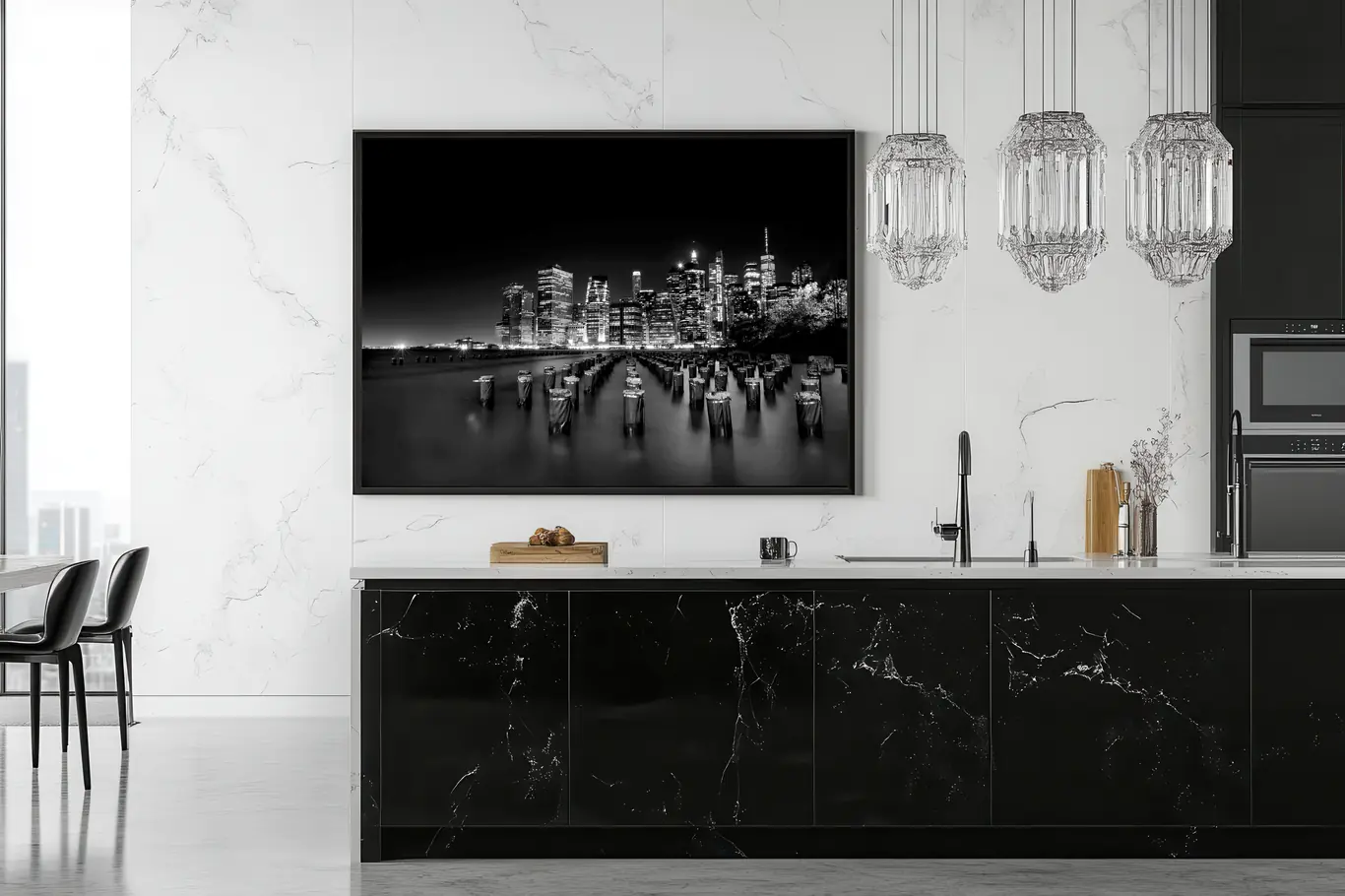
Another important element is how the artwork is produced.
Fine Art Photography can be presented in limited, numbered editions signed by the artist. This distinguishes an artwork from a mass-produced decorative reproduction.
OX Photography presents photographs as artworks in limited editions, with archival-quality printing and a certificate of authenticity.
A limited edition establishes a different relationship between the artist and the collector.
It is not simply about purchasing an image.
It is about acquiring an artwork associated with a particular series, creative process, and moment in the artist’s journey.
To better understand the relationship between exclusivity, authenticity, and value, explore our article about why to invest in limited-edition Fine Art Photography.
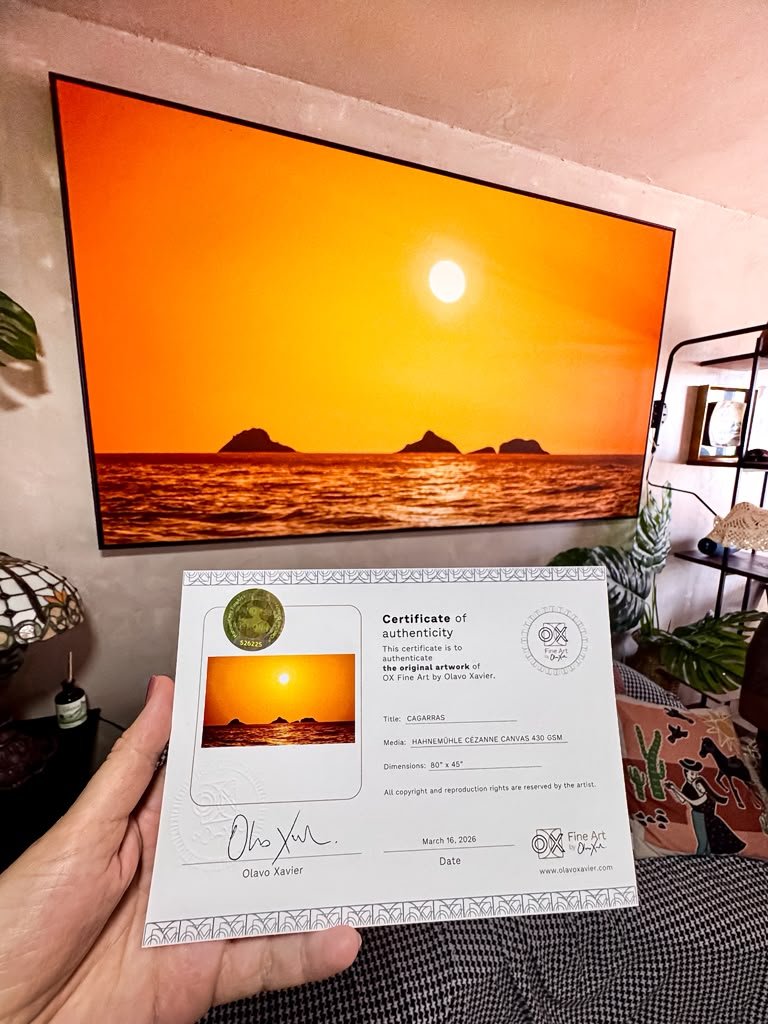
Perhaps this is the best way to summarize the concept.
A Fine Art photograph may begin as a digital file, but its purpose does not end on a computer or smartphone screen.
It can become a physical artwork.
It can occupy a wall.
It can accompany someone for decades.
It can become part of a collection.
It can become associated with a journey, a stage of life, a memory, or simply a feeling that does not need to be explained.
That is why artistic photography can establish such a profound relationship with the person experiencing it.
An artwork does not need to tell a completely defined story.
It can leave room for the viewer to complete the story.
When we talk about Fine Art Photography, we are also talking about the artist.
The artwork carries their way of seeing the world.
In the case of Olavo Xavier, this journey includes different experiences. Before dedicating himself to photography, Olavo spent approximately fifteen years in the corporate world. At the age of 33, he decided to leave that path and study design and art, eventually discovering in the camera a new form of expression.
This journey helps explain the identity of his work.
Music remains an important reference. Silence, rhythm, tension, and pause appear as significant elements in the construction of his images.
The result is Fine Art Photography that seeks to unite visual precision with emotional depth.
More than simply recording what is in front of the camera, the goal is to construct something that continues to exist after the photographed moment has ended.
There is no single answer.
The best artwork is not necessarily the most expensive, the largest, or the one currently in fashion.
It is the one that establishes a connection.
When choosing a Fine Art photograph, consider:
It is also important to think beyond decoration.
Ask yourself:
Would I choose this photograph if it did not match the room?
If the answer is yes, there is a good chance you are choosing art — not simply decoration.
We live surrounded by images.
We photograph meals, trips, people, landscapes, and events every day. Many of these images are viewed for a few seconds and forgotten soon afterward.
Fine Art Photography follows a different logic.
It does not need to compete for attention.
It can wait.
It can remain.
It can be viewed today and create an entirely different feeling ten years from now.
This is where photography and memory meet.
An artwork can change meaning as we change.
The environment changes.
The home changes.
Life changes.
And the photograph remains.
Fine Art Photography is photography created with artistic intention.
It is a form of expression built from the artist’s vision, composition, light, technique, sensitivity, and emotion.
It differs from simply recording a moment because there is a deeper concern with what the image communicates and what it evokes.
In Fine Art Photography, every choice matters.
Light matters.
Composition matters.
Framing matters.
Printing matters.
Paper matters.
Size matters.
Space matters.
But above all, what matters is what the artwork makes you feel.
At OX Photography, Olavo Xavier develops his work through this relationship between precision, emotion, silence, and presence. His photographs are conceived to move beyond the idea of a simple decorative image and establish a deeper relationship between artwork, space, and viewer.
Because a Fine Art artwork does not simply occupy a wall.
It transforms the way a space is perceived.
And sometimes, it also transforms the way we perceive ourselves.
Fine Art Photography is a form of artistic expression in which an image is created with an aesthetic and conceptual intention. Rather than simply recording a moment, the photographer uses composition, light, perspective, technique, and sensitivity to create an artwork capable of conveying emotions, awakening memories, and establishing a connection with the viewer.
The main difference is intention. Ordinary photography may aim to record a moment, while Fine Art Photography is conceived as an artistic expression. The photographer interprets what they see and uses elements such as light, composition, perspective, and editing to create an image with identity and meaning.
Yes. When created with artistic intention and presented as an artwork, Fine Art Photography can be considered a form of art. The process involves the artist’s vision, aesthetic choices, careful production, and, in many cases, limited editions, archival-quality printing, and a certificate of authenticity.
Fine Art Photography can go beyond decoration. An artwork can establish a focal point, create contrast, convey an atmosphere, and contribute to the identity of a space. For this reason, Fine Art photography is used in residential and corporate interiors, hotels, offices, and spaces designed by architects and interior designers.
A limited-edition Fine Art photograph is produced in a predetermined number of copies. Each print may be numbered and accompanied by a certificate of authenticity. A limited edition creates a sense of exclusivity between the artist and collector and distinguishes the artwork from mass-produced reproductions.
Black and white is an aesthetic choice frequently used in Fine Art Photography. By removing color, attention can be directed toward elements such as light, shadow, texture, contrast, form, and composition. This language can create timeless images and intensify the atmosphere and emotion of an artwork.
Start with your connection to the artwork. Pay attention to what the photograph makes you feel and then consider the space where it will be displayed. Size, proportion, framing, lighting, and the relationship with the architecture are also important. The best Fine Art photograph is not simply one that matches the room, but one that adds meaning to it.
Yes. Fine Art Photography can contribute to the visual identity of an interior, create a point of interest, and establish an atmosphere. For example, a large-format artwork can have an architectural presence, while a smaller photograph can create a more intimate and contemplative experience.
If you want to continue exploring this universe, discover more OX Photography articles:
Explore the Fine Art Photography collections at OX Photography and discover artworks created to be collected, contemplated, and used to transform spaces.